
Meta Ad Library: How to Find, Analyze, and Use It to Run Better Ads
-
Sep, 09, 2026
Table of Contents
ToggleMeta Ad Library: How to Find, Analyze, and Use It to Run Better Ads
If you run Facebook or Instagram ads, the Meta Ad Library is one of the most useful free tools you’re probably not using enough.
It’s built for marketers, media buyers, small business owners, and anyone who wants to see exactly what ads are running across Meta’s platforms — no guesswork needed.
In this guide, you’ll learn:
- What the Meta Ad Library actually is and why it gives you a real competitive edge
- How to search and navigate it without wasting time clicking around
- How to dig into competitor ad strategies and turn what you find into smarter campaigns of your own.
-
Meta Ads Library is a free, publicly searchable database that shows all active ads running across Meta platforms — Facebook, Instagram, Messenger, and Audience Network. Originally launched to increase political ad transparency, it now covers all ad categories, giving anyone a behind-the-scenes look at what brands are actually running.
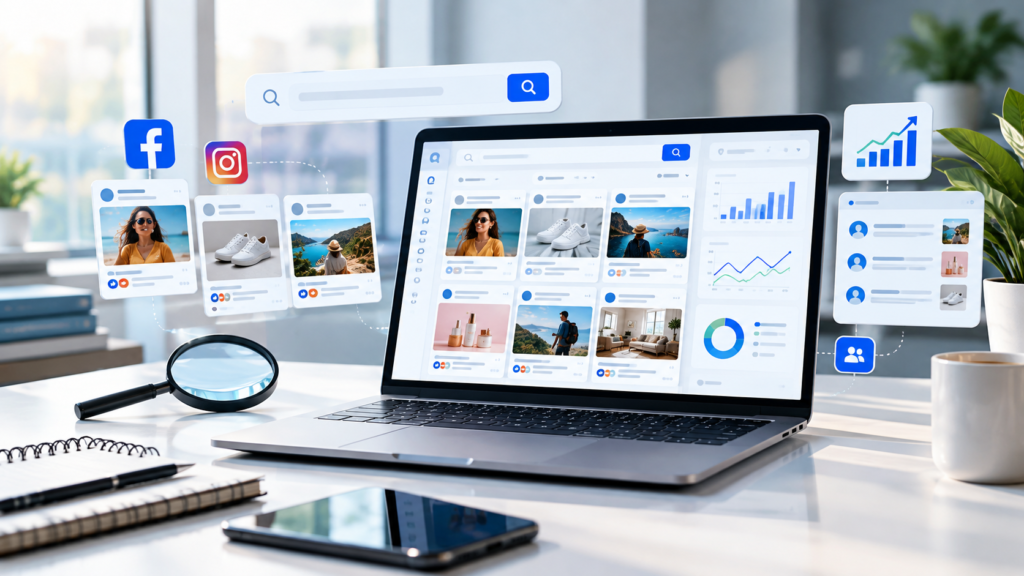
The tool serves a wide range of users:
- Advertisers can study competitor creatives, messaging, and offers
- Researchers can track how brands communicate during key events
- Journalists can verify ad claims and spending patterns
- Small business owners can spot trends without hiring expensive agencies
You don’t need an account to search — just a browser and a question worth answering.
Learn Why Transparency Drives Better Marketing Decisions
When advertisers know their campaigns are visible to the public, they tend to be more intentional and honest in their messaging. That accountability pushes the whole industry toward cleaner, clearer advertising.
For you as a marketer, this transparency is a goldmine. Seeing what’s working for others — in real time — removes guesswork from your own strategy and helps you make smarter creative decisions faster
Head straight to facebook.com/ads/library. No login required. Select your country, choose an ad category, and start searching immediately.

Filters are your best friend here. Narrow results by:
- Platform – Facebook, Instagram, Messenger, or Audience Network
- Ad category – All ads, housing, employment, or political
- Date range – Spot seasonal campaigns or recent launches
- Language – Find localized ad variations from global brands
- Advertiser – Jump directly to a specific brand’s full ad catalog
- Click any ad to pull up deeper information:

|
Data Point |
What It Tells You |
|
Active/inactive status |
Whether a campaign is still running |
|
Estimated spend range |
Budget signals from competitors |
|
Impressions estimate |
How widely an ad was distributed |
|
Platforms shown on |
Where they’re pushing spend |

Look beyond individual competitors and scan the broader niche. Patterns reveal what resonates with your shared audience.
|
Element |
What to Look For |
|
Headlines |
Emotional triggers vs. feature-led copy |
|
Visuals |
Lifestyle imagery vs. product-focused shots |
|
CTAs |
“Shop Now” vs. “Learn More” vs. “Get Offer” |
Lorem ipsum dolor sit amet, consectetur adipiscing elit. Ut elit tellus, luctus nec ullamcorper mattis, pulvinar dapibus leo.
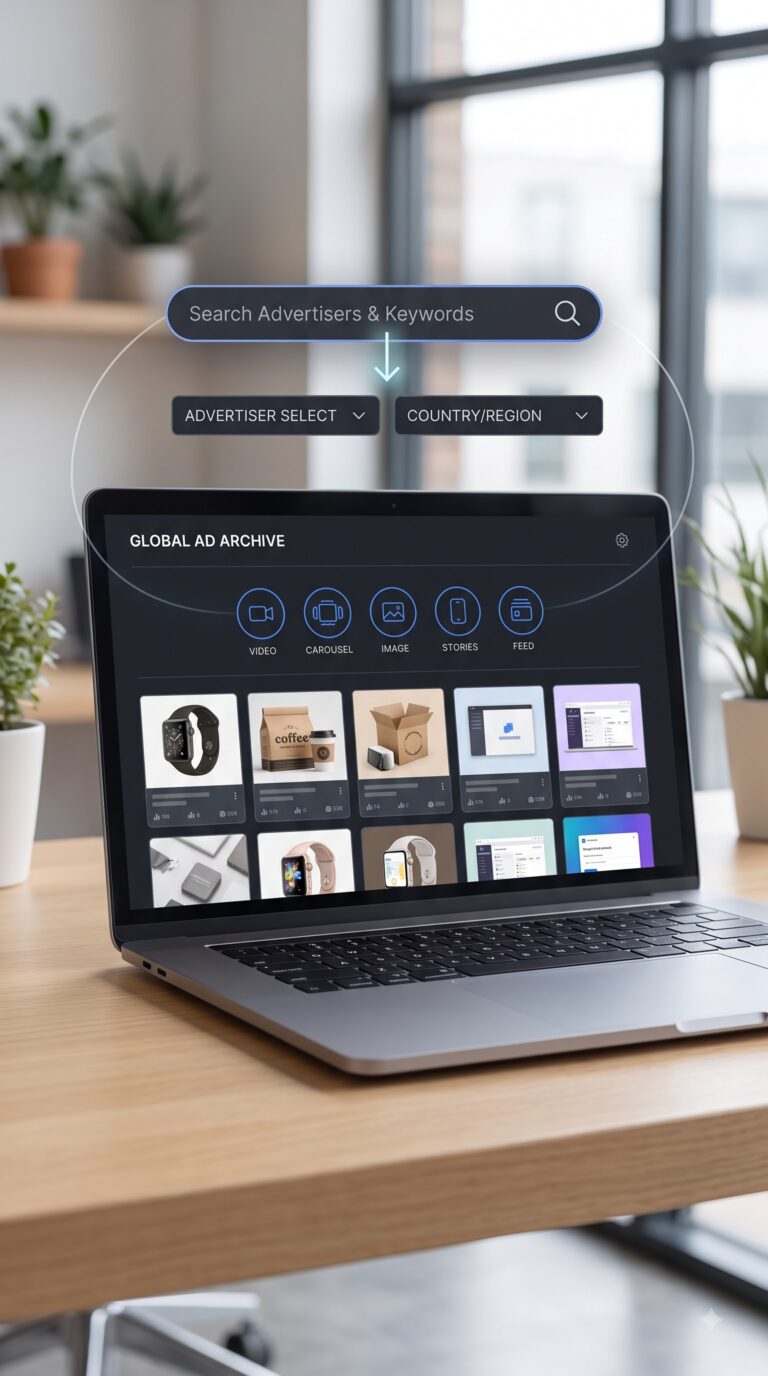
When multiple brands use similar language or visuals, that’s a strong signal the audience responds to that approach.
Spot Gaps in the Market to Outperform Rivals
The real gold is in what competitors aren’t doing. If everyone targets broad audiences with discount-heavy messaging, going deep on a specific pain point or customer segment can cut through the noise fast. Look for underserved angles and own them before someone else does.
Look at which ad formats competitors run longest — those are their winners. If carousel ads dominate your niche, test them. If short video clips keep appearing, that’s your signal.
Refine Your Targeting Based on Competitor Patterns
- Notice which platforms competitors favor (Facebook vs. Instagram)
- Check if ads run across all placements or specific ones
- Spot seasonal patterns in when ads launch or pause
Test New Creative Ideas Inspired by Industry Leaders
Don’t copy — borrow smart. If a top brand uses bold text overlays or UGC-style clips, run your own version. Small creative shifts inspired by proven ideas can dramatically lift click-through rates.

|
Long-running ads |
Already tested and profitable |
|
Repeated messaging |
Resonates with the audience |
|
Consistent visual style |
Builds brand recognition efficiently |
Skip the guesswork and skip costly trial-and-error rounds.
Look at which ad formats competitors run longest — those are their winners. If carousel ads dominate your niche, test them. If short video clips keep appearing, that’s your signal.
Refine Your Targeting Based on Competitor Patterns
- Notice which platforms competitors favor (Facebook vs. Instagram)
- Check if ads run across all placements or specific ones
- Spot seasonal patterns in when ads launch or pause
Test New Creative Ideas Inspired by Industry Leaders
Don’t copy — borrow smart. If a top brand uses bold text overlays or UGC-style clips, run your own version. Small creative shifts inspired by proven ideas can dramatically lift click-through rates.
Skip the guesswork and skip costly trial-and-error rounds.
Improve Ad Copy by Studying Winning Headlines
Pay close attention to:
- Hook structure — question, bold claim, or number-led
- Tone — casual, urgent, or benefit-focused
- CTA phrasing — “Shop Now” vs. “See Why Thousands Switch”
Adapt these patterns to your brand voice.
The Meta Ad Library is one of those tools that’s way more powerful than most people give it credit for. From scoping out what your competitors are running to making sure your own ads stay compliant, it hands you real, actionable information without any guesswork. You can spot trends, borrow inspiration, and build smarter campaigns just by paying attention to what’s already working in your space.
The best part? It’s completely free and available to anyone willing to dig in. So if you haven’t made the Meta Ad Library a regular part of your marketing routine, now’s a great time to start. Open it up, search for a few competitors, and see what jumps out at you. You might be surprised how much your next great ad idea is just sitting there, waiting to be discovered.